
Ukraine has failed to fulfill a key structural benchmark required for the seventh review of the IMF program and has already missed the deadlines for three benchmarks tied to the upcoming eighth review. Additionally, under the Ukraine Facility plan, the country risks failing as many as nine indicators in Q1 2025.
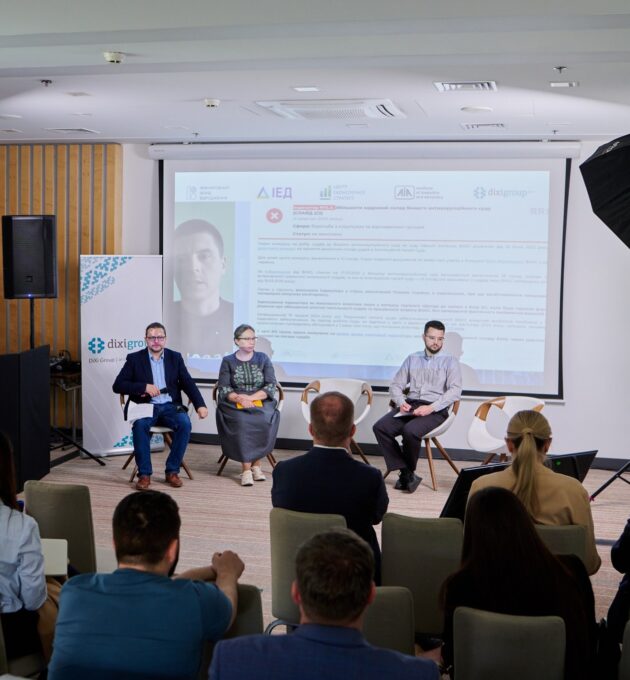
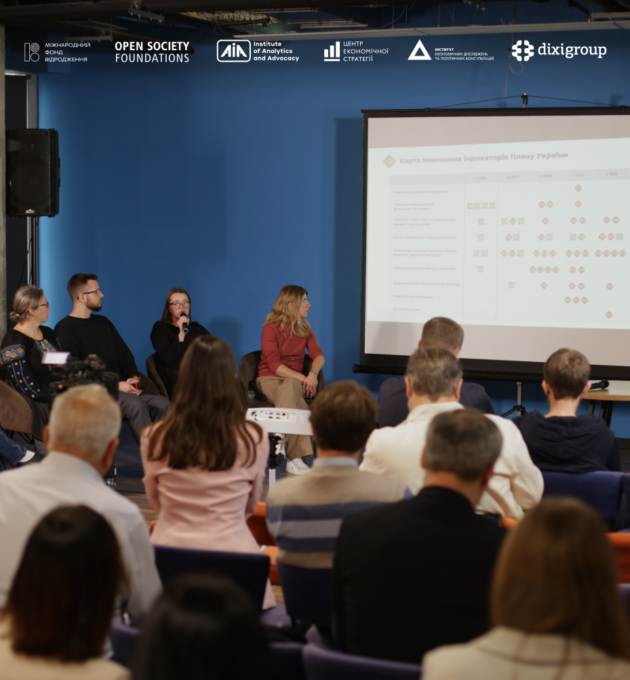
Participants of the #RRR4U consortium highlighted these risks during the presentation of the 13th issue of the IMF and EU program monitoring report under the Ukraine Facility.
“Ukraine has not fulfilled one of its commitments — the repeal of the ‘Lozovyi amendments,’ which was necessary for the successful seventh review. The fact that Ukraine managed to reach a staff-level agreement on this matter means that once again, the IMF is showing flexibility,” said Maksym Samoyliuk, an economist at the Centre for Economic Strategy.
Indeed, on March 28, the IMF Executive Board approved the seventh review of the Ukraine Program. A prerequisite for this review was adopting a law increasing excise taxes on tobacco products, which was delayed by several months and resulted in a budget shortfall of over UAH 2 billion. Meanwhile, the deadline for repealing the Lozovyi amendments was postponed.
The IMF also reduced the size of the next tranche from $900 million to $400 million at the request of Ukraine’s Ministry of Finance.
“In 2025, we have a better situation with external financing of the budget deficit, primarily due to the ERA program – funding from revenues generated by frozen Russian assets. That’s why Ukraine requested to shift some of the financing to 2026–2027,” Samoyliuk explained.
The upcoming eighth program review, during which the IMF will assess structural benchmarks as of the end of March, may also be problematic.
“Of the five benchmarks to be assessed, only two were completed on time. Three remain unfulfilled: the appointment of the head of the Bureau of Economic Security (the competition is still ongoing), approval of the external audit of NABU, and preparation of a strategy for the National Securities and Stock Market Commission (NSSMC). Progress is unsatisfactory. We’ll either have to complete the benchmarks late – there is time until June – or negotiate changes or deadline extensions with the IMF,” Samoyliuk said.
Showing flexibility again, the IMF postponed the corresponding benchmarks, making the eighth review more likely.
At the same time, Ukraine continues working on its reform program with the EU. In mid-March, the EU Council approved €3.5 billion (of which €400 million are grants) for Ukraine based on the fulfillment of Q4 2024 indicators. Ukraine expects to receive €12.5 billion from the EU in 2025.
Aliona Korohod, an expert at DiXi Group, warned that Ukraine is already facing problems meeting its Ukraine Facility commitments for Q1. “By the end of March, Ukraine had to fulfill 16 indicators. As of the 27th, only seven had been completed. Nine remained unfulfilled,” she said. “We might repeat last year’s pattern of delays, which led to late reporting and corresponding delays in funding — potentially as late as June. That’s not good.”
Moderator of the discussion, Oleksandra Betliy, Senior Research Fellow at the Institute for Economic Research and Policy Consulting, said that several indicators were expected to be completed by the end of March and expressed hope that the rest would be completed soon: “We hope that at least by April, we’ll meet the targets and receive funding in the second quarter, even if delayed.”
The special topic of the March edition of #RRR4U monitoring was the issue of repealing the “Lozovyi amendments.” Viacheslav Kurylo, an analyst at the Institute for Analysis and Advocacy, explained that the “Lozovyi amendments” were partially repealed earlier and now refer to proposed changes to the Criminal Procedure Code regarding deadlines for pre-trial investigations, case closures due to missed deadlines, and procedures for extending those deadlines.
Although this structural benchmark was introduced in the IMF memorandum back in the summer of 2024 and was due by October, then December, it still remains unfulfilled. “The authorities have effectively failed to meet this benchmark, which has been postponed until the end of July. There are concerns from MPs, businesses, and other stakeholders regarding the obligation’s implementation,” Kurylo said.
A compromise will have to be found to repeal the Lozovyi amendments, as the government has proposed a bill, and MPs have submitted three alternatives. Businesses do not support any of the drafts; NABU supports one of the MPs’ versions. Yet, all versions contain risks.
According to Business Ombudsman Roman Waschuk, about 94% of cases against businesses never reach court. “And in a slightly smaller portion of cases, suspicions are not even filed,” he said. “Investigations can drag on indefinitely and are a major form of pressure from unscrupulous state agencies.”
The business community emphasizes two key demands. “First, that extension of investigative deadlines be authorized only by courts, not unilaterally by prosecutors. Second, criminal cases with unlimited timeframes should be restricted to a narrow scope,” said Andriy Yerashov, Head of the Analytical Center at the Union of Ukrainian Entrepreneurs.
Pavlo Demchuk, Senior Legal Advisor at Transparency International Ukraine, believes criminal investigations must have reasonable time limits. “We’ve repeatedly seen judges automatically close high-profile cases handled by anti-corruption agencies because investigation deadlines were exceeded. That’s why we believe automatic case closures should be abolished,” he said, adding that all current draft laws require improvement.
Yevhen Tokar, Head of the Organizational and Analytical Support Division of NABU Detectives, noted that investigative judges do not examine the full case materials during pre-trial proceedings as they do during court trials. “The alternative bill No. 12367-3, which we support most, allows prosecutors to extend deadlines to six or twelve months,” Tokar explained.
However, this area also needs reform, given the business distrust in prosecutors’ decisions. “We must stop talking about judicial reform in isolation. It must go hand in hand with prosecutorial reform. If we talk only about honest judges but forget the importance of honest prosecutors, the business will remain unprotected,” said Oleksandra Betliy.
More details are available at: https://rrr4u.org/analytics/monitoryng-vykonannya-programy-mvf-ta-dopomogy-yes-berezen-2025/
Event video: https://youtu.be/EOV_prOhnSs
The monitoring report and this event were made possible with support from the International Renaissance Foundation.
RRR4U (Resilience, Reconstruction, and Relief for Ukraine) is a consortium of four Ukrainian civil society organizations: Centre for Economic Strategy, Institute for Economic Research and Policy Consulting, Institute for Analysis and Advocacy, and DiXi Group.